

Substack First, Medium Second. Here’s How I Publish in 2026.
The system I am running right now, and why it just changed.


This month, I changed where I write my daily articles. Not what I write. Not when. Just where I open the blank page first. The knock-on effects have been bigger than I expected.
I have been writing daily for over three years. For most of that time, I opened a new Medium draft every morning, wrote the article, polished it, and hit publish. Medium was where the work happened. Everywhere else (Substack, Gumroad, the community) was downstream.
Last month I flipped it.
Now, Substack is where the article gets written. Medium becomes the second stop, not the first. The order matters more than I would have guessed.
What the system looks like right now
SUBSTACK FIRST. I write the article on Substack and publish it immediately at around 8am. Newsletter subscribers don’t receive it as a newsletter. That is the audience that carries the business, so it’s important not to overwhelm them. These articles are designed to grow the newsletter subscribers. (It seems to be working)
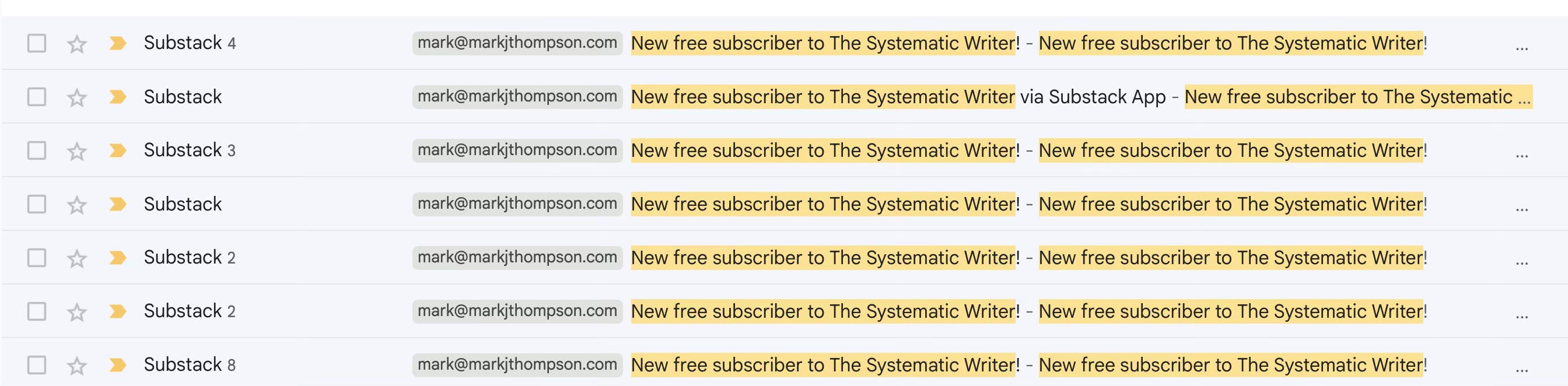
The article is simply published as a normal article on Substack (who knew that was possible!) and is used as content for Substack notes during the day.
MEDIUM SECOND. I use Medium’s import-from-URL feature, paste the Substack link, and the article comes across. I then change the in-article calls to action to point to Substack (with a tracking link so I can see which Medium readers click through). The Medium reader gets the same article. I try to give readers who find my content resonating an easy next step.
GUMROAD THIRD. Every article links out, somewhere in the body, to one of my free or low-cost guides on Gumroad. When a reader downloads a guide, they go onto my email list. The list is what grows and what I use to inform people about any new free guides, reports, or offers they may find useful.
THE COMMUNITY AT THE END OF THE CHAIN. The readers who liked the free stuff and want more will hopefully find their way to my community, The Systematic Writer Inner Circle, which also now has a secondary substack growth group for members.
The idea is to create a welcoming and hopefully fun location where people can talk to each other about what’s working and what isn’t, and access all my courses and training if they feel they want to use their writing to build an income without them feeling pressured.
Why the order changed
For a long time, writing on Medium first felt right. Medium’s algorithm would put articles in front of new readers, and Substack was where the people who already knew me showed up.
Two things have changed. The first is that Medium’s distribution has become less predictable. A very small number of articles get amplified and the rest sit where they were published. In two or three days, most articles seem dead.
The second, and more important shift, is that the Substack-to-list connection is measurable in ways the Medium funnel never was. When someone subscribes from a Substack post, I see it.
The Substack algorithm is currently very “tame” and is focused on helping you get discovered. By using Substack notes over time, more people see my content over there than on Medium (and it happens over a longer time, it's not rare to see a bunch of likes on a 3 or 4-week-old note)
When a Medium reader clicks through to Substack, my tracking link tells me they did. Three platforms, one clear path through them. This new system hasn’t been going for long, but the growth since I started running it this way is the strongest evidence I have that the order matters.
What it actually looks like in practice
A typical morning, in order:
Write the Substack article and publish it, no fanfare, no email, I just hit publish.
Open Medium, go to Stories, hit Import, paste the Substack URL. The article comes across. Add the subtitle that always gets dropped during the import, tidy it up, edit it if needed, and schedule it for the next day. (for example, the title of this article is different on Medium as it made more sense)
Open Switchy (a link shortener with UTM tracking) and create a tracking link for the in-article call to action. Paste it into the imported Medium article.
Publish to Medium with the new tracking link, scheduled for the same 8am the next day.
This is, deliberately, a low-effort system. The article gets written once. The pipeline that turns it into a Substack post, a Medium post, and some Substack notes it takes maybe fifteen minutes or less after i hit publish the first time.
The bits I am still figuring out
What the Substack subscriber gets that the Medium reader does not.
The Substack version of an article could be tighter and more direct, written for someone who has already raised their hand by subscribing to the newsletter. I have the ability to paywall part of the article so I could maybe add some higher value content at some point… (but I probably won’t)
The Medium version can stay as the longer essay. Whether that distinction is worth the extra ten minutes a day is the question I am sitting with this week.
I don’t think there is a simple answer, and only time will tell if each article should be presented slightly differently.
The older Medium-first articles. I have 750 of them. Some are still pulling readers. None of them has the new tracking links or the Substack flow built into them. Retrofitting all 750 is not realistic. I will probably touch only the ones still bringing in regular reads.
Why the order matters more than the platforms
The reason I am telling you all of this is not that I think you should copy my system. The point is noticing.
After three years of doing the same thing, I changed it because the data I had been collecting all along finally said something I could not ignore. The hassle of changing a working system is real. The cost of not changing it, or even testing it, when the data is telling you you need to try something different, is higher.
Just a reminder, paid subscribers now get access to 2 communities: a Substack Growth community and my Systematic Writer community, along with access to ALL my courses and books.