

Six Months Into Going Substack-First: What Actually Happened
Was it worth making Substack my "Home Hub?"


The free subscribers came. The paid ones didn’t. And it still worked, just not the way I expected.
About six months ago, I made Substack the centre of my writing business.
I’d been banging on about the move for a while, so I owe you an update on how it’s actually gone, numbers and all, including the bits that didn’t work. Mid-year, when it’s quiet, is a good time to reflect on what’s happened so far during the year.
Let me start with what worked, because plenty did.
The free audience grew, and it grew well. I’m now just shy of 2,900 subscribers on Substack, up roughly a quarter on where I was. That’s people who put their hand up to receive a weekly newsletter from me on a platform I don’t have to maintain. It also gives me an audience I’d never have reached on my own.
Followers are up to over 5000 now
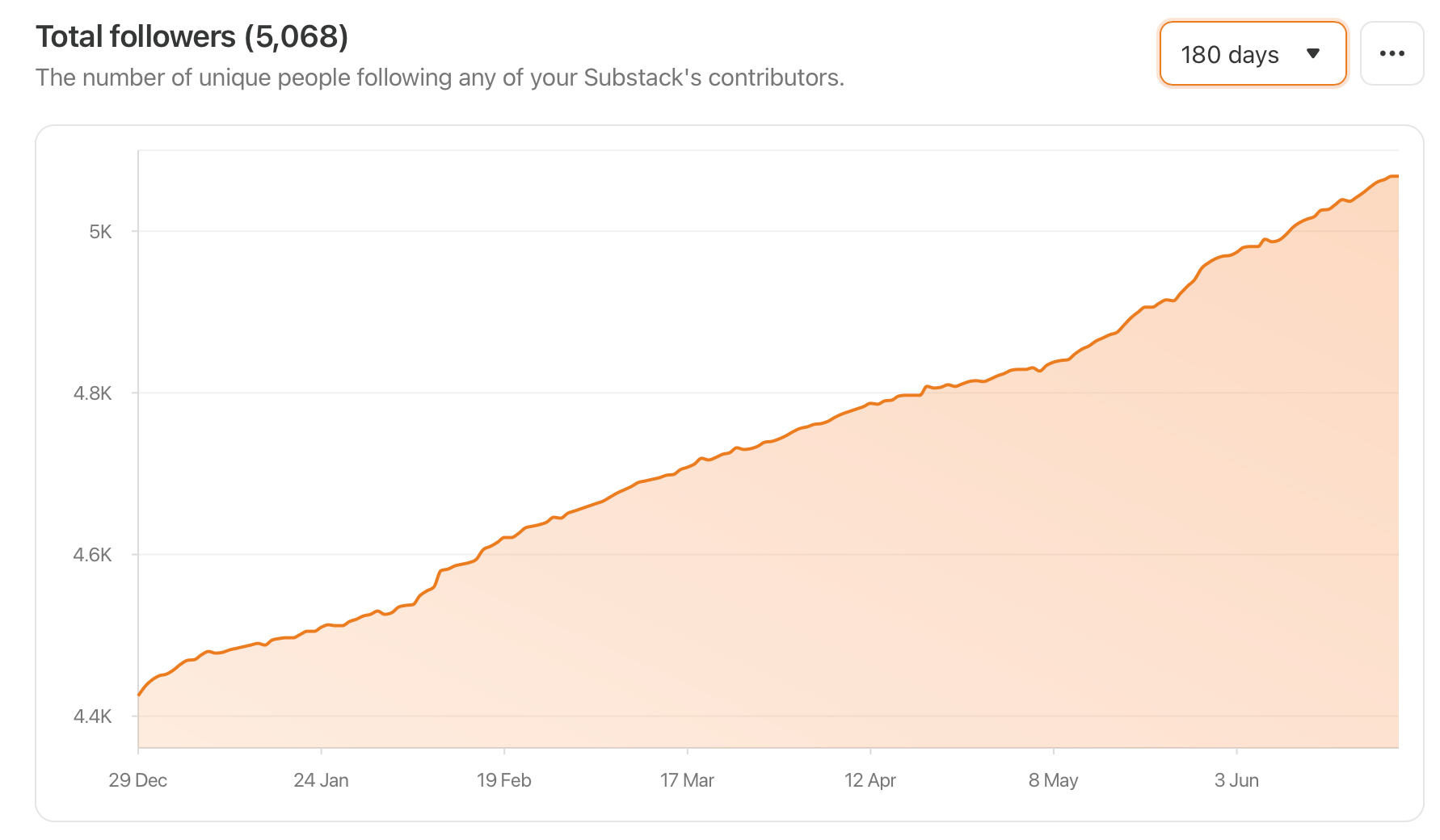
As an engine for building an audience going Substack-first did exactly what I hoped.
Now here’s the part most people leave out of these updates.
The paid subscribers did not come.
I have 26 paid subscribers on Substack right now. Last month I had 27. So in the month just gone, the needle didn’t just stall, it went backwards by one. Substack’s own paid tier, the thing everyone assumes is the whole point of going Substack-first, is bringing in around two thousand dollars a year. That’s it.
If I’d judged the whole move by that one number, I’d be calling it a failure and writing a very different article.
But that number is only a failure if Substack paid subscriptions were ever supposed to be where the money came from. And they weren’t. I just hadn’t said that clearly enough, possibly because I was half-hoping they would be.
Here’s where the money actually came from over the same six months.
My products did the earning. Gumroad took around 800 sales this quarter (almost double Q1), and a big chunk of those buyers arrived from Medium AND Substack, which now combined sends roughly 41% of my product sales (almost a 50-50 split between them). My community has passed 800 members. The writing on Substack built the trust, and then people bought a book, joined the community, or picked up a course, none of which shows up anywhere on my Substack revenue line.
In reality, Substack-first turned out to mean Substack-first for connection, not for cash. The platform is where I meet people and earn their trust. The earning happens one step downstream, in the products and the community that trust leads to.
That distinction matters, because a lot of writers are pouring their hopes into converting Substack paid subscribers and feeling like failures when twenty-six people sign up.
If that’s you, look at whether your free audience is growing and whether anything downstream is selling. My paid tier is an anomaly. My business is fine. Both things are true. It’s just that Substack didn’t deliver what most people think it’s supposed to.
So what am I changing for the second half of the year?
Not the strategy, just my expectations of each part. I’ll keep Substack as the front door, the place I show up, grow my audience, and build the relationships, and I’ll stop measuring its success by paid conversions that were never the plan. I’ll keep highlighting the products and community that actually earn my income. And I’ll continue to publish on Medium, since the data says it’s still one of my biggest sales channel.
If there’s one thing to take from six months of this, it’s that “going Substack-first” is a brilliant way to build an audience and a poor way to bill them directly. Use it for what it’s good at. Make your money one step further down the path. And hope that Substack addresses what is starting to become a problem for many people. (no one wants to pay for multiple newsletters, they want to be able to support writers they like without breaking the bank.
If you want the practical version of how I grew on Substack from a standing start, that’s exactly what my book The Long Game covers.
Well written. I’m still trying to figure out how all these people who send me emails every day beckoning me to spend money on their tips and techniques for being successful on Substack. I wonder how they do it and how they are making money and apparently they are making money, but aren’t the people with the money, the subscribers, going to be running out of it pretty soon? I mean, how many Substack can one person pay to subscribe to?
It's interesting that this article got more comments on Medium.